Solana (SPL) vs. Ethereum (ERC-20): Which “Road” is Your Money On?
The Difference: ERC-20 is the token standard for the Ethereum network, known for high security but higher fees. SPL is the standard for the Solana network, built for extreme speed and near-zero costs. Choosing the wrong network when sending USDC will result in a permanent loss of funds. This efficiency is exactly why Visa and Stripe now support USDC on Solana to power global payments.
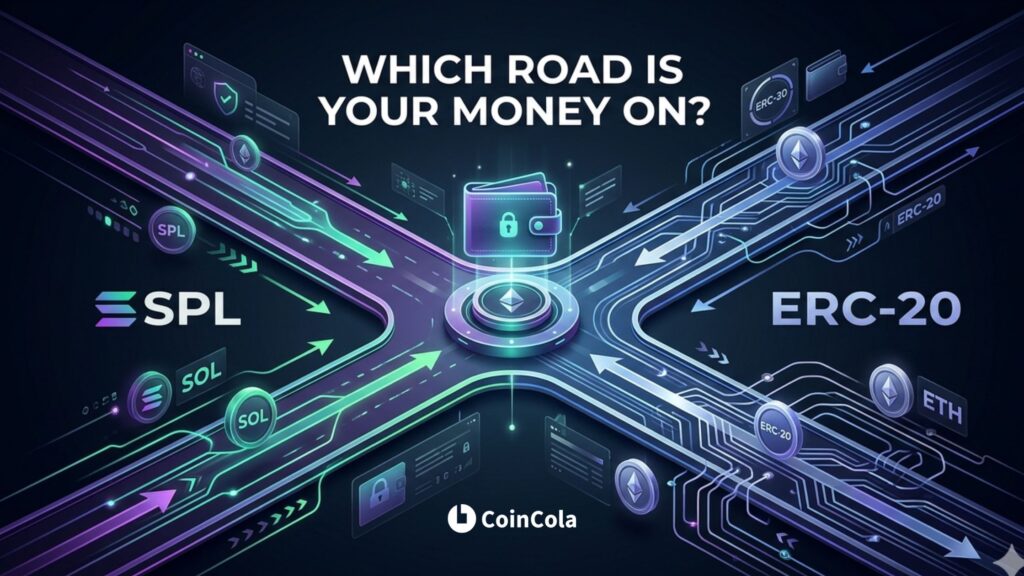
Imagine you are sending a parcel from Lagos to Abuja. You have two choices:
- The Heavy Hauler: A massive, armored truck that is incredibly secure but moves slowly through traffic and costs 15,000 Naira in fuel.
- The Delivery Bike: A lightning-fast courier that weaves through traffic, arrives in minutes, and costs only 200 Naira.
In the world of “Digital Dollars” (USDC), Ethereum (ERC-20) is that armored truck, and Solana (SPL) is the delivery bike. Both get the job done, but picking the wrong “road” for your journey can be a costly mistake.
1. Ethereum (ERC-20): The Secure Vault
Ethereum was the first “world computer,” and its ERC-20 standard is the gold-standard for crypto. Almost every major institution and exchange supports it.
- The Pros: Unmatched security and global “trust.”
- The Cons: It gets crowded. When many people use it at once, “Gas Fees” skyrocket. In 2026, sending $50 might cost you $10 in fees—which doesn’t make sense for small payments.
- Best For: Sending large amounts (e.g., $5,000+) where you don’t mind waiting 10 minutes for maximum peace of mind.
2. Solana (SPL): The Speed Demon
Solana was built for the modern age of “Instant Everything.” Its SPL standard is what companies like Visa and Stripe are now using for global payments.
- The Pros: It is incredibly cheap. Most transactions cost less than $0.00025 (literally fractions of a Naira). It is also nearly instant, settling in under a second.
- The Cons: It is a newer network compared to Ethereum, though it has become the go-to for daily commerce in 2026.
- Best For: Freelance payments, daily spending, and moving money to friends and family.
The “Cheat Sheet” Comparison
| Feature | Ethereum (ERC-20) | Solana (SPL) |
| Transaction Fee | $2.00 – $15.00+ | < $0.01 (Under 1 Naira) |
| Speed | 5 – 15 Minutes | < 1 Second |
| Wallet Style | Starts with 0x… | Random (e.g., 7G9z…) |
| Ideal Use | Large “Savings” | Daily Payments / P2P |
⚠️ The “Million Dollar” Warning: Don’t Cross the Streams!
This is the most common mistake Nigerians make: Sending USDC from an Ethereum wallet to a Solana address.
If you generate a USDC-Solana (SPL) address on your CoinCola app, the person sending you money MUST also select the Solana network on their end.
- If they send via Ethereum to your Solana address: The money vanishes into “no man’s land.”
- The Rule: The “Road” (Network) must match on both sides.
How to Choose on CoinCola
When you open your CoinCola wallet to deposit or withdraw, ask yourself: “How much do I want to pay in fees?”
- Select USDC.
- Choose your Network: Click Solana (SPL) to enjoy the lowest fees and fastest speeds.
- Confirm the Address: Copy your address (notice it does not start with 0x) and send it to your sender.
Summary: Pick the Right Tool for the Job
If you are moving your life savings, the Ethereum “Armored Truck” is great. But if you’re a Nigerian freelancer getting paid by a US client or a trader looking for the best margins, the Solana (SPL) “Delivery Bike” is the only way to fly.
Ready to save on fees? Log in to CoinCola and generate your Solana (SPL) address today.
FAQs
While both are stablecoins, many Nigerian professionals prefer USDC because it is issued by Circle, a US-regulated company that undergoes monthly audits. This transparency makes it a popular choice for large freelance payments and long-term savings, especially when paired with the speed of the Solana network.
The difference is massive. On the Ethereum (ERC-20) network, gas fees can range from $2.00 to $20.00+ depending on how busy the network is. On the Solana (SPL) network, the fee is consistently less than $0.01 (often less than 1 Naira), making it the most cost-effective way to move small or large amounts.
Warning: This is a “cross-network” error. Because Solana and Ethereum are different blockchains, sending funds to the wrong network’s address usually results in a permanent loss of funds. Always ensure both the sender and the receiver have selected the Solana (SPL) network before hitting “Send.”
On CoinCola, you can use the P2P Marketplace. Simply go to the P2P section, select USDC, and find a verified buyer offering NGN. Since Solana transactions are near-instant, you can confirm receipt of your USDC and have the Naira sent to your bank account via a local transfer in minutes.