A Guide to Russian Stablecoins in Africa: A7 Network, A7A5, and Nigeria Expansion
Lagos, Nigeria – Recent promotional materials and international reports indicate that A7, a Russian-linked cryptocurrency payment network, is making a concerted push into the African market. The network has showcased promotional videos featuring an office in Nigeria and has formally announced plans to establish a new branch in Zimbabwe.
The Strategic Shift to Africa
The move comes as Russian financial entities seek alternative cross-border payment rails amidst ongoing international sanctions. According to a report by the Financial Times on April 6, 2026, the A7 network is positioned as a “bridge” for trade, utilizing a ruble-backed stablecoin known as A7A5.
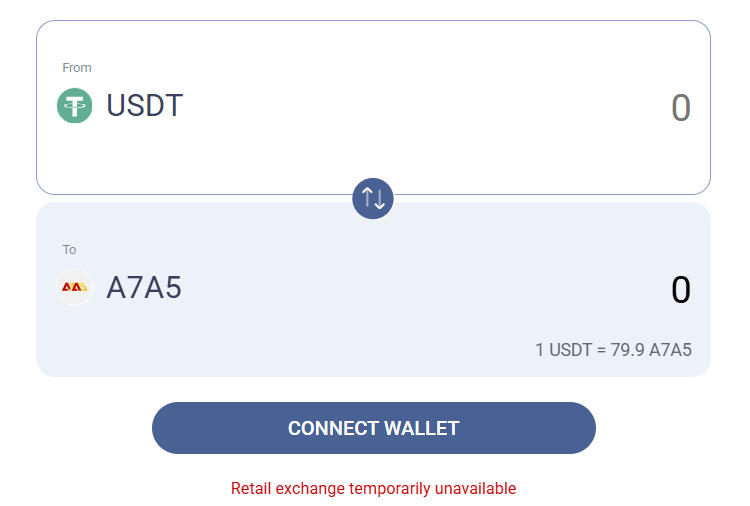
Russian Foreign Minister Sergei Lavrov previously described A7 as the country’s “first international financial platform,” explicitly naming Nigeria and Zimbabwe as early participants in the ecosystem.
Understanding the Technology Behind Stablecoins
While networks like A7 utilize specific protocols for their assets, understanding the broader stablecoin ecosystem is essential for any savvy trader. The choice between different blockchain networks—such as the high-speed Solana (SPL) or the industry-standard Ethereum (ERC-20)—can significantly impact your transaction fees and settlement times.
As stablecoins become a more prominent fixture in African trade, knowing which network suits your needs is your best defense against market volatility.
Learn More: Curious about the technical differences between the top stablecoin networks? Read our deep dive: Solana SPL vs. Ethereum ERC-20: Which is Better for Stablecoins?
Key Developments on the Ground
- Nigeria Operations: A7 claims to have established a physical presence in Nigeria as of late 2025. Promotional videos circulating online show branded office spaces intended to serve as a hub for regional operations.
- Zimbabwe Expansion: The network has publicly stated its intent to launch a dedicated branch in Zimbabwe to facilitate trade settlements and digital asset services.
- Regional Recruitment: Job postings have emerged for roles such as “Project Manager” in neighboring countries like Togo, suggesting a broader strategy to build a Pan-African footprint from the ground up.
Market Context and Transparency
While the “A7” network claims to handle a significant portion of Russia’s foreign trade payments, industry analysts and local crypto professionals in Lagos and Harare have noted a relatively small “on-the-ground” footprint so far.
Independent researchers have highlighted that while the marketing push is significant, the actual integration into local retail or P2P markets remains in its early stages. For Nigerian traders, the emergence of such platforms represents the growing diversity of liquidity providers entering the continent, though the regulatory status of these specific entities remains a point of observation for the Securities and Exchange Commission (SEC).
What This Means for Traders
The entry of specialized payment networks like A7 highlights Africa’s growing importance in the global “alternative finance” landscape. However, as with any new platform, users are encouraged to:
- Verify Office Locations: Confirm the physical legitimacy of any “new office” before engaging in high-value transactions.
- Monitor Regulation: Keep an eye on CBN and SEC circulars regarding foreign-linked crypto payment systems.
- Stick to Proven Platforms: Use established P2P marketplaces like CoinCola for secure, verified trading while these newer networks undergo market testing.
FAQs
The A7 network is a Russian-linked financial platform designed for cross-border payments. It was launched to provide an alternative to the SWIFT system, allowing businesses to settle international trade contracts using digital assets. It is reportedly co-owned by Russia’s state-backed Promsvyazbank (PSB) and has recently targeted expansion into emerging markets like Nigeria and Zimbabwe.
A7A5 is a ruble-backed stablecoin that operates primarily on the Tron (TRX) and Ethereum blockchains. Unlike retail stablecoins like USDT, A7A5 is largely used for B2B (business-to-business) settlements. It is pegged 1:1 to the Russian Ruble and is officially recognized in Russia as a “Digital Financial Asset” (DFA) for use in foreign trade.
Currently, the Central Bank of Nigeria (CBN) and the SEC have not issued a specific ban on the A7 network. However, because the platform is linked to sanctioned Russian entities, Nigerian businesses and traders should exercise caution. While A7 claims to have opened an office in Nigeria, it is not yet listed as a licensed Digital Asset Exchange Provider in the country.
Russian financial entities are looking for “non-Western” payment rails to bypass international sanctions. By expanding into Nigeria, Zimbabwe, and Togo, these networks aim to facilitate direct trade in national currencies (like Naira or Zim Gold) and ruble-pegged tokens, reducing reliance on the US Dollar for import and export settlements.
No, A7A5 is not currently listed on major global retail exchanges like Binance or CoinCola. It circulates within a “closed loop” of Russian-linked platforms and specific decentralized exchanges (DEXs) on the Tron network. For secure retail trading in Nigeria, it is recommended to stay with established platforms like CoinCola that support liquid assets like USDT, BTC, and ETH.